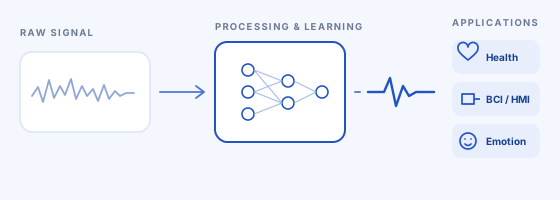
What we work on

Research

We develop soft, wearable devices and intelligent systems for measuring and interpreting brain and physiological signals.

01

Soft On-body Bioelectronics & Sensors

We build the hardware that touches the body — ultrathin, skin-conformal electronics comfortable enough to wear all day, and platforms that read several signals at once. Comfort is not a nicety here: it decides whether the data gets collected at all.
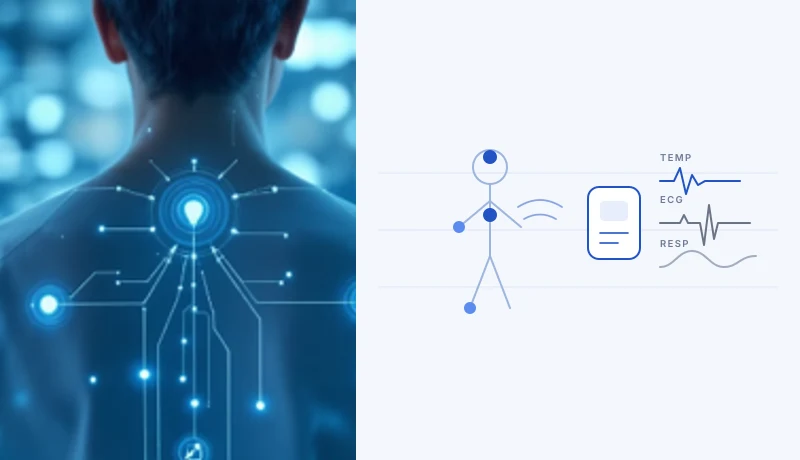
Integrated Multi-Sensor Monitoring System

Integrated Multi-Sensor Monitoring System

One wireless platform that reads several body signals at once — cardiac, respiratory, thermal and motion. Conditions no single sensor can catch, such as dehydration, heat stress or early kidney injury in outdoor workers, only become visible when the signals are read together.
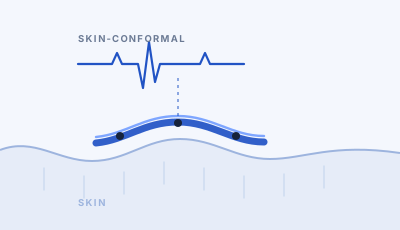
Soft Physiological Signal Patch

Soft Physiological Signal Patch

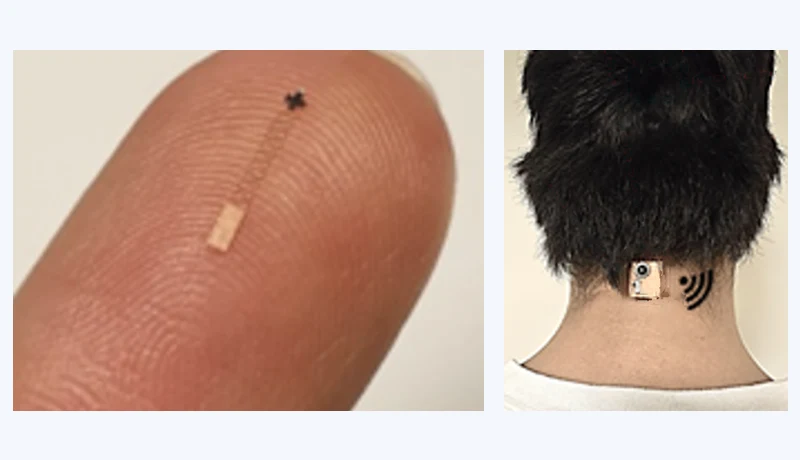
Skin-conformal patches built from ultrathin nanomembrane electrodes — thin enough to forget you are wearing them. We use them for overnight sleep and apnea screening at home and for continuous monitoring outside the clinic, where comfort decides whether the data gets collected at all.
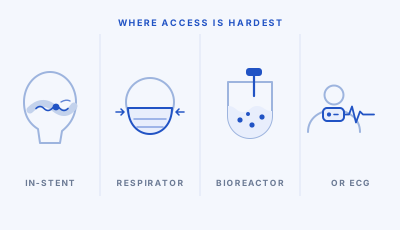
Clinical & Bio-Interface Sensing Systems

Clinical & Bio-Interface Sensing Systems

Sensors that work where access is hardest — inside a stent to follow intracranial pressure without surgery, inside a respirator that reshapes itself to fit, inside a bioreactor watching a stem-cell culture for weeks, and on a patient right through an operation. Each one has to survive its environment before it can measure anything.
02

Neural & Human–Machine Interfaces

We sense and decode signals from the nervous system and the muscles it drives, then turn them into control. The goal is an interface that stays accurate through a long day of wear, not a few minutes of demonstration.

Everyday Brain Sensors
Adapted from Kim et al., PNAS 2025

Everyday Brain Sensors

Micro-scale electrodes that sit between hair follicles rather than on top of hair, so EEG stays clean while the wearer moves. Controlling motion artifact this way is what turns a brain–computer interface from a few minutes in a lab into something usable for hours.

Human / Brain–Machine Interfaces
Adapted from Kim et al., Advanced Science 2024

Human / Brain–Machine Interfaces

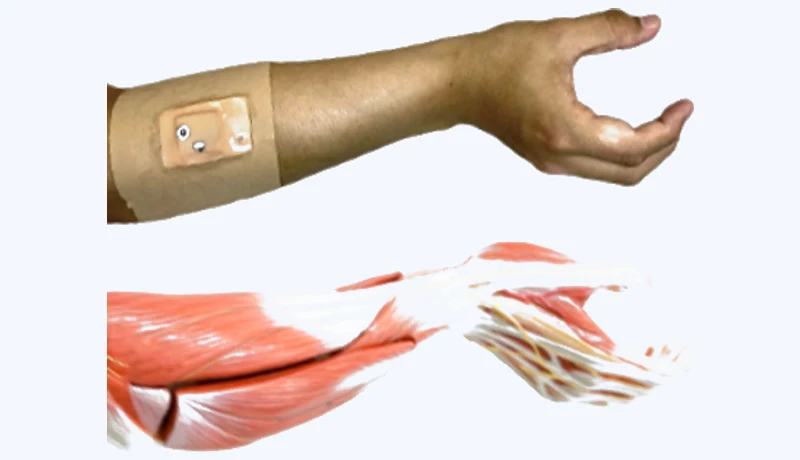
Driving augmented-reality interfaces and machines from the body's own signals — brain activity for direct control, and forearm muscle activity read by a soft electrode array to recognize hand gestures. The hard part is what breaks them in practice: electrodes that shift, motion that adds artifact, and accuracy that decays over a long session.

03

Biosignal Intelligence for Mental & Physical Health

Measuring is only half of it. We turn continuous biosignals into decisions — clinical endpoints scored by measurement rather than observation, mental and physical state read in real time, and models that still work on the same person weeks later.

Biosignal Intelligence for Mental & Physical Health

Healthcare Monitoring

Turning a continuous stream of signals into a clinical answer — sleep quality and apnea measured at home, intracranial pressure after a stent procedure, and drug-trial endpoints scored by measurement instead of by observation.

Mental & Physical State and Performance

Reading stress, drowsiness, fatigue and attention from the body in real time, and asking how well they hold up under load — EEG neurofeedback that keeps a learner engaged through an online lecture, ventilation and hydration tracked in athletes mid-effort. The loop closes when the system acts on what it reads instead of only logging it.

Emotion Recognition

Classifying emotion from brain and facial-muscle signals, including expressions too brief to see — and checking that the model still works on the same person weeks later, which is where most such systems fail.

Current projects

  • 2026.07 – 2030.12Researcher

    BCI-INSIDE-OUT-EARS: EEG-Acoustic Dual-Signal Sensing and Personalized Real-World Care for Senior Depression

    Senior Depression Care Platform
  • 2026.03 – 2029.02Principal Investigator

    Development of an Emotion- and Intent-Interpreting Sign Language Recognition System Using a Wireless Flexible Electronics-Based Platform for Combined Facial Expression and Hand Gesture Recognition

    Sign Language Recognition System
  • 2026.03 – 2030.02Researcher

    Bio-Stimulation and Disease Prevention Monitoring Based on Conductive Fibers

    Conductive Fiber Wearable Platform
  • 2025.03 – 2028.02Principal Investigator

    Development of a Wearable System and Analysis Technology for Personalized Multi-Site Biosignal Measurement

    Personalized Biosignal Measurement